 |
| Says Jezebel: "During an elaborate ceremony at the Vatican's Saint Peter's Square that involved a lot of fancy costumes, bejeweled bibles, Latin liturgies and probably some bored, sleep-weary children, clandestine Sith lord Pope Benedict XVI canonized Kateri Tekakwitha, making her the first Native American saint." |
 |
| "Gorgeously written … one comes out of it having seen terrible and beautiful visions" says the New York Times of Cohen's book |
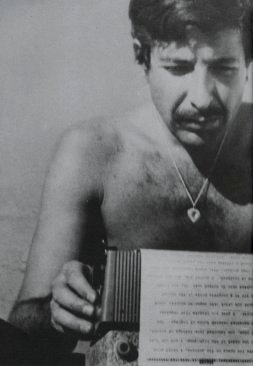 |
| The Leonard Cohen Files shows him getting it done back in the day |
The book is considered an "experimental" work of the '60s, with its split narratives and time shifting and wordplay as I recall. Despite its genuine warmth and scathing honesty, it reads a bit sophomoric to me now. Cohen said he typed the whole thing on speed.
But as a seeker living at the edge of the world, looking for adventure or whatever comes our way, it felt like a heavenly blast of Truth and Art and Transcendence and all those restless romantic intellectual spiritual passionate Manichean-dichotomy-resolving, trauma-healing, angst-abating ideals that make a man do strange crazy things in pursuit of himself, of meaning, of happiness, of peace or enlightenment, pleasure or pain, whatever.
So often it all leads instead to chaos, doubt, angst, pitying -- and back to the beginning. I'd summon the image of a serpent eating its own tail at this point, but that seems a bohemian indulgence too far.

Tekakwitha recently became a saint in the Roman Catholic Church, or so I read. Much more important, she is used to stirring effect in Cohen's piercing novel.
//SPOILER// I will never forget the brilliant, astonishing, koan-like insight at the philosophic "climax" -- the dramatic apex of a piece of prose, or so a schoolmarm taught me, to some use at least, in my formative years -- of the story, as I recall: "I change! I remain the same!" It still wells up feeling in me to think and write and read those words.
As an aside, eventually a gay couple bought the house I was living in and tossed us scrabbling renters out. One was a scab news photographer filling in for the AP during a strike; one was a barmaid from Montreal, Cohen's hometown; another was a girl I loved and lost who ascended to some kind of museum conservation expertise.
 |
| Fog City offers a litany of noirish indulgences, then as now |

A fine feature review of the novel is here if you want to immerse your soft warm brain in a deeper vat of literary ponderingness.
And hey, here's a whole latterday Cohen concert if you're interested. His lyrics appeal to the Bukowski in me. Plus he wears a bad fedora.
On that note, here's that guy who sang of a Leonard Cohen afterworld and now resides On a Plane of his own. Why not.
// ENTREATY // I am stymied, by the by, that I cannot find the mural shown online anywhere, despite no dearth of documentation on "Mission District murals." To wit.
The painting in question is on a diocese building or something like that. Maybe the Church put a hex on those who would steal the soul of the souls so depicted? Perhaps someone in San Fran will elevate the mural to the digital plane.
Once upon a time I took pics myself to slide inside the cover of the book, but those bygone media of the era have proved far less digitally shareable with their disappearing into boxes and such than what the kids do today with their fancy doowhacky devices with the thingamabobs and the ganeckdagazoinks and so on. Kids.


No comments:
Post a Comment